Intestinal cell cultures
PepT1 and KPV uptake
The membrane gives a small peptide a practical problem. A transport experiment supplies a more interesting answer than a general claim about potency.
KPV uptake
The intestinal uptake paper places PepT1 at the centre of KPV’s entry into epithelial cells. The study identifies it as a dipeptide and tripeptide transporter: its job includes carrying short peptide chains. KPV was transported into the intestinal epithelial cells through that route.
For me, PepT1 gives the uptake result a satisfying physical basis: a named transport process stands between the added peptide and the response inside a cell. The question becomes where that process operates and which experimental conditions support it.
The broader alpha-MSH review describes KPV as the hormone’s C-terminal tripeptide, meaning its short end fragment. That relationship explains the family connection. PepT1 supplies a separate explanation for cellular access.
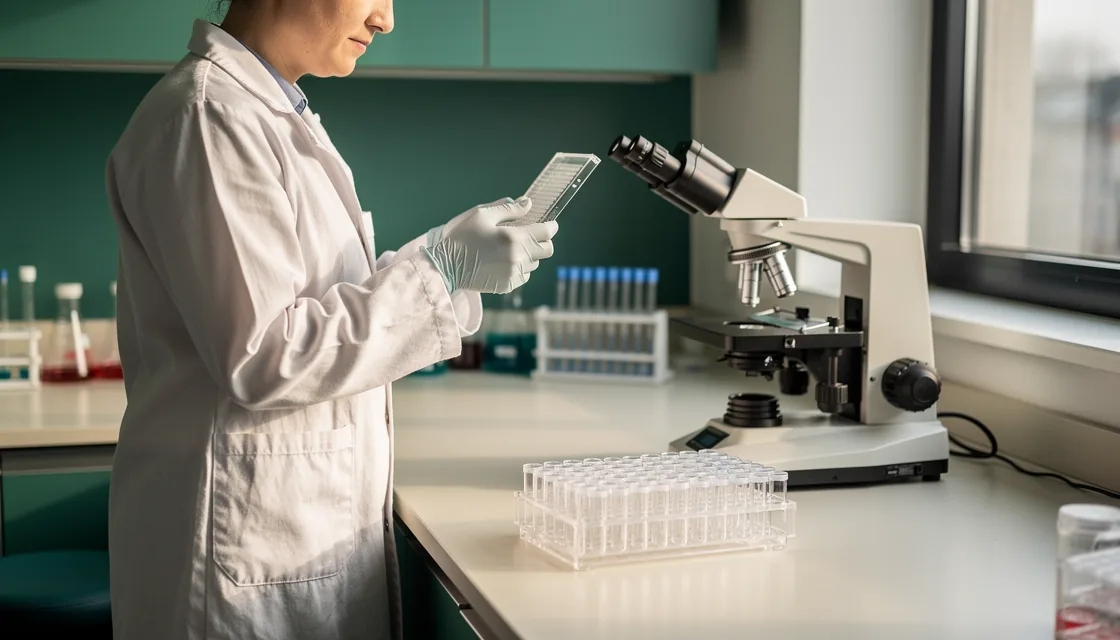
Caco2-BBE, HT29-Cl.19A and Jurkat cells
The human-derived cell systems in the study included Caco2-BBE and HT29-Cl.19A intestinal epithelial cells and Jurkat T cells. KPV reduced activation of NF-kB and MAP-kinase inflammatory signalling and reduced pro-inflammatory cytokine secretion in the epithelial and immune-cell experiments. These are cell-culture findings; the participants were cells in experimental systems.
NF-kB and MAP kinases are names for signalling machinery being measured here. I don’t need them to stand in for every possible inflammatory process. The reported effects are already specific enough to be worth following.
Transport raises a further question for me: how closely are entry and response connected across these different cell systems? An intestinal uptake finding gives a route into intestinal epithelial cells; establishing the corresponding route elsewhere would require its own experiments.
Oral KPV in mice
The same paper also used mice with DSS- and TNBS-induced colitis. KPV delivered in drinking water reduced colitis severity in those models. The animal work extends the investigation from isolated cells to an inflamed intestine, where the route of delivery and the tissue response can be studied together.
I value the animal work because it brings the living intestinal tissue into the account. Human treatment remains a separate question. The cultured human cells and the living mice contribute different observations. There is plenty to investigate within those observations before trying to turn them into a practical instruction.
The colon-model page follows the recovery and tissue findings. Later efforts to build materials around KPV appear in the hydrogel experiments.